A History of Alexandria Bay, New York
|
|
|
This region was borderlands of the Algonquins or Algonkin) Indians, North American Indian Tribe and the Iroquois. Early Canadian history relates that a bloody war was going on between the Algonquins in the St. Lawrence and the Iroquois, when the country was first visited by French Samuel Champlain who took part in war on the side on the Algonquins and turned the tide of success for a time in favor of his allies on August 10, 1535 Jacques Cartier with three vessels entered the gulf (HONOR OF The SAINT FEAST CELEBRATED ON THIS DAY).
He named the St. Lawrence and the name was applied to the river that flowed into the sea. In the early 1600’s the French explorers and Jesuit missionaries applied the river the name “Miles Idles” became a general term they often wrote of the great beauty
of the area. War between the French and English in North America began in 1775 over colonizing of the territory. The revolutionary war with Great Britain and again between the same forces in 1812 the defense of the 1000 Islands was decided importance.
The town of Alexandria derives its name from Alexander son of J.D LeRay de Chaumont under whom much of the land was settled. Township was formed April 3, 1821. Many are familiar with the Patriot War 1837 to 1839. The night of May 29 the British Steamer Sir Robert Peel was captured and plundered and burned on the south side of Wellesley Island shortly after the war of 1812 settlers began taking up plots of woodlands along the St. Lawrence for timber and later farming, trees were felled and the tops used to make Potash (potassium carbonate) has been used from the dawn of history in bleaching textiles, making glass, and, from about A.D. 500, in making soap ) which was in great demand in England, later in the steamboat era timber also provided the fuel for vessels. Until 1870 when coal took its place.
A privateering expedition was fitted out at Sackets Harbor for a cruise among the islands with the hope of cutting off and capturing a detachment of Bateaux Laden with provisions and supplies which was expected up river bound for Kingston under convoy of the British gunboat spitfire. The American schooners Neptune and fox, the former a private boat commended by Captain Samuel Dixon armed with one six pounder, a swivel gun and manned with 24 determined Yankee volunteers stopped along the way and finally put in at the mouth of
Cranberry Creek where two passed when at the daylight the Bateau was discovered at Simonds Landing making ready to beat up river under guard of the spitfire but before they could get under sail our daring privateers men made a hasty landing attacked them without being discovered and captured fifteen Bateau and several gunboats without firing a single shot or losing a man. The prizes were taken to Cranberry Creek and landed prisoners were sent off to Sackets Harbor under Guard of fifteen men.
In 1820 there were about 30 houses in the town among those were Samuel Youngs, J.W. Fuller Carnegie and Dr. Jere Carrie R. First Land cleared was in Barnes Settlement and early resident was Charles W. Cornwall.
Alexandria Bay became incorporated village in 1878 the census taken that year disclosed 638 the corporation also included 930 acres of Islands. One early industry was ice harvesting reported in 1910, boat building was large scale by Hutchinson Bros. in 1906 the first to build motor boats also operation on the stone quarry hauling granite in 1909.
In 1876 Elisha Visger built a small steamer called CYGNET and this started the tour boat business. River was crowded with crafts.
Making trips between Clayton and Alexandria Bay. The beautiful hotels were scattered around the islands. Charles Crossman entered the hotel business in 1848. Visitors began to come to this resort. The fishing in this area was a great attraction with St. Lawrence River oarsmen to hire for fishing parties(Guides). Travel to this resort in those days was mostly by the big side wheeler steamer although stage and private carriage were used. A plank road from Theresa to Alexandria Bay 12 miles long was completed in 1849.
The luxurious quality of steamships of era brought early visitors. Governor Seward and ex-president Van Buren visited the area for fishing and pleasure. In 1872, President Grant and family visited George Pullman of Palace-Car fame to visit his Island cottage. The same year the thousand islands house was built by O.G.
Staples. The casino on Casino Island was built in the first decade of the 1900’s in the conjunction hall one of the important institutions of the village was built in 1805.
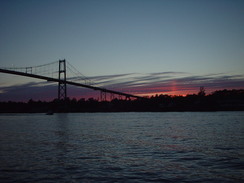
The thousand island bridge linking the mainland shores of the United States with Canada was opened in 1938. A new era of
transportation came to North Country.
This is but a sampling of the rich history of this area. Many of its features are stories in themselves the hotels, the yachts, the summer homes, timber rafting, shipbuilding, steamships and more.
He named the St. Lawrence and the name was applied to the river that flowed into the sea. In the early 1600’s the French explorers and Jesuit missionaries applied the river the name “Miles Idles” became a general term they often wrote of the great beauty
of the area. War between the French and English in North America began in 1775 over colonizing of the territory. The revolutionary war with Great Britain and again between the same forces in 1812 the defense of the 1000 Islands was decided importance.
The town of Alexandria derives its name from Alexander son of J.D LeRay de Chaumont under whom much of the land was settled. Township was formed April 3, 1821. Many are familiar with the Patriot War 1837 to 1839. The night of May 29 the British Steamer Sir Robert Peel was captured and plundered and burned on the south side of Wellesley Island shortly after the war of 1812 settlers began taking up plots of woodlands along the St. Lawrence for timber and later farming, trees were felled and the tops used to make Potash (potassium carbonate) has been used from the dawn of history in bleaching textiles, making glass, and, from about A.D. 500, in making soap ) which was in great demand in England, later in the steamboat era timber also provided the fuel for vessels. Until 1870 when coal took its place.
A privateering expedition was fitted out at Sackets Harbor for a cruise among the islands with the hope of cutting off and capturing a detachment of Bateaux Laden with provisions and supplies which was expected up river bound for Kingston under convoy of the British gunboat spitfire. The American schooners Neptune and fox, the former a private boat commended by Captain Samuel Dixon armed with one six pounder, a swivel gun and manned with 24 determined Yankee volunteers stopped along the way and finally put in at the mouth of
Cranberry Creek where two passed when at the daylight the Bateau was discovered at Simonds Landing making ready to beat up river under guard of the spitfire but before they could get under sail our daring privateers men made a hasty landing attacked them without being discovered and captured fifteen Bateau and several gunboats without firing a single shot or losing a man. The prizes were taken to Cranberry Creek and landed prisoners were sent off to Sackets Harbor under Guard of fifteen men.
In 1820 there were about 30 houses in the town among those were Samuel Youngs, J.W. Fuller Carnegie and Dr. Jere Carrie R. First Land cleared was in Barnes Settlement and early resident was Charles W. Cornwall.
Alexandria Bay became incorporated village in 1878 the census taken that year disclosed 638 the corporation also included 930 acres of Islands. One early industry was ice harvesting reported in 1910, boat building was large scale by Hutchinson Bros. in 1906 the first to build motor boats also operation on the stone quarry hauling granite in 1909.
In 1876 Elisha Visger built a small steamer called CYGNET and this started the tour boat business. River was crowded with crafts.
Making trips between Clayton and Alexandria Bay. The beautiful hotels were scattered around the islands. Charles Crossman entered the hotel business in 1848. Visitors began to come to this resort. The fishing in this area was a great attraction with St. Lawrence River oarsmen to hire for fishing parties(Guides). Travel to this resort in those days was mostly by the big side wheeler steamer although stage and private carriage were used. A plank road from Theresa to Alexandria Bay 12 miles long was completed in 1849.
The luxurious quality of steamships of era brought early visitors. Governor Seward and ex-president Van Buren visited the area for fishing and pleasure. In 1872, President Grant and family visited George Pullman of Palace-Car fame to visit his Island cottage. The same year the thousand islands house was built by O.G.
Staples. The casino on Casino Island was built in the first decade of the 1900’s in the conjunction hall one of the important institutions of the village was built in 1805.
The thousand island bridge linking the mainland shores of the United States with Canada was opened in 1938. A new era of
transportation came to North Country.
This is but a sampling of the rich history of this area. Many of its features are stories in themselves the hotels, the yachts, the summer homes, timber rafting, shipbuilding, steamships and more.